Fascinating Seal Facts

Pankaj Singh
| 13-03-2026
 · Animal Team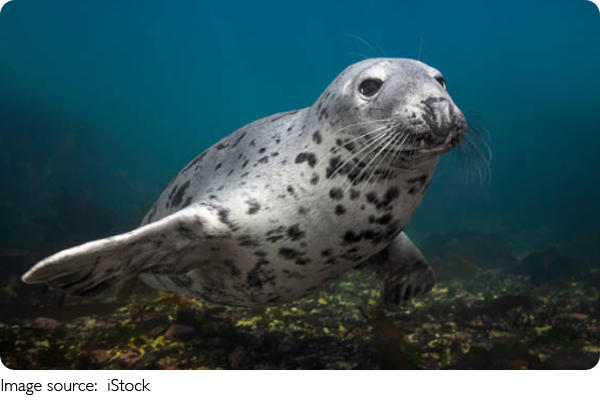
Seals are among the most remarkable marine mammals on Earth, captivating wildlife enthusiasts with their playful appearances and impressive aquatic skills.
Far more than just “cute” creatures lounging on rocks, seals possess a suite of biological adaptations that allow them to thrive in diverse environments — from icy polar waters to temperate seas.
Through reliable scientific sources, we explore verifiable facts about seals' biology, behavior, and life history that reveal just how extraordinary these pinnipeds truly are.
What Seals Are and Where They Live
Seals belong to a group of marine mammals known as pinnipeds, which also includes sea lions and walruses. Pinnipeds are characterized by their fin like limbs that are highly adapted for life both in water and on land. True seals, also called “earless” seals, lack visible external ear flaps and have shorter front flippers than their eared pinniped relatives.
There are more than 30 species of seals found across the world's oceans, inhabiting regions from polar seas to cooler coastal waters. Some seals prefer open ocean life, while others are more often found along coastlines or on sea ice.
Their bodies taper smoothly from a broad midsection to narrow ends, making them streamlined for swimming. Beneath the skin, a thick layer of blubber provides insulation against cold water, stores energy, and helps them maintain buoyancy while at sea.
Adaptations for Aquatic Life
Seals are highly specialized for an amphibious lifestyle. While on land they may appear somewhat awkward, their underwater capabilities are exceptional.
• Breath holding and diving: Some seal species can hold their breath for extended periods while diving for prey. Their bodies store oxygen efficiently in the blood and muscle tissues, allowing seals to pursue fish, squid, and other seafood deep below the surface.
• Body design: Seals' limbs have evolved into powerful flippers that propel them through water. True seals primarily use their hind flippers for propulsion, moving them in a side to side “sculling” motion, while using front flippers for steering.
On land, true seals cannot rotate their hind flippers forward. As a result, they move by undulating along their bellies in a caterpillar like motion.
Their whiskers, or vibrissae, are also remarkable. These sensitive tactile organs allow seals to detect movement and vibrations in the water, helping them locate prey even in dark or murky conditions.
Feeding, Reproduction, and Behavior
Seals are carnivores that primarily feed on fish, squid, crustaceans, and other marine animals. While most species hunt in relatively shallow waters, some can dive deeper or for longer durations in search of food.
Reproduction in seals is closely tied to their annual life cycles. Most seals come ashore or onto ice to mate and give birth. Mothers nurse their young with nutrient rich milk, a process that rapidly builds up the pups' insulation and energy reserves for survival in cold waters.
Many seal species are also social during breeding seasons, gathering in large groups on beaches or ice floes. Although their social structures vary by species, these gatherings are critical for mating, birthing, and early pup rearing.
Seals and Their Environment
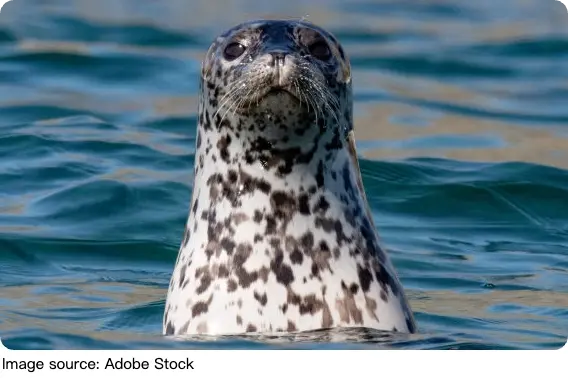
Seals rely heavily on healthy marine ecosystems. Changes in sea temperature, prey availability, and ice cover can all affect seal populations. Conservation efforts around the world aim to protect seals and their habitats.
Because they spend a significant portion of their lives in the ocean but depend on land or ice for reproduction, seals are vulnerable to threats that impact both environments. Pollutants, entanglement in fishing gear, and habitat disturbance can all pose risks. Protecting coastal and marine environments benefits seals and the myriad other species that share their habitats.
Reflections on Seal Adaptations and Conservation
Seals are a testament to evolutionary innovation. Their streamlined bodies, underwater endurance, and sensory adaptations reflect millions of years of refinement for life between sea and shore. Observing how seals navigate the challenges of aquatic life offers insight into the broader balance of marine ecosystems.
At the same time, seals remind us that even species well adapted to their environments are not immune to human impacts. Effective conservation requires both scientific understanding and thoughtful stewardship of ocean space. By appreciating these marine mammals beyond their charm — as complex, capable animals — we can better support their continued presence in the wild.